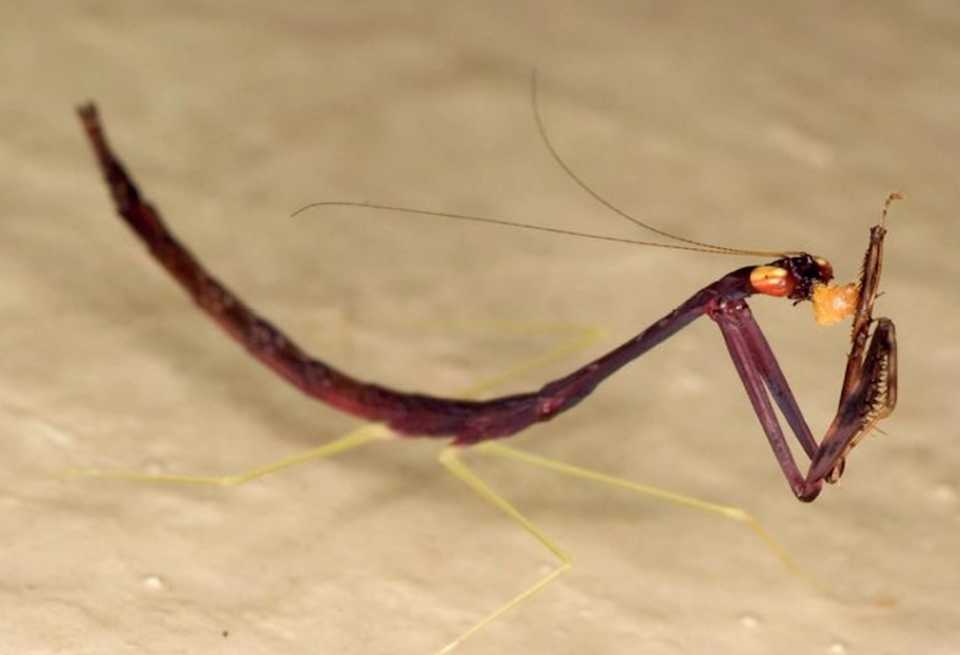
Due to its delicate build, the mantis preys exclusively on lightweight victims: tiny insects like midges and mosquitoes. Its hunting technique relies on stealth rather than strength; it remains motionless among branches, relying on camouflage to ambush passing prey. Unlike bulkier mantids that can tackle larger victims, this species uses its pinprick-like claws to grasp minuscule targets, demonstrating an evolutionary trade-off between disguise and predatory power.
In the dense forests of Borneo, this stick mantis exemplifies nature’s propensity for specialization. Its existence challenges the common perception of mantids as robust hunters, proving that even within a single order, evolution can yield radically different forms. For entomologists, it’s a reminder that in biodiversity hotspots like Borneo, even the most unassuming "twigs" may harbour remarkable, highly adapted life forms—each a testament to the endless creativity of natural selection.
-------- END --------