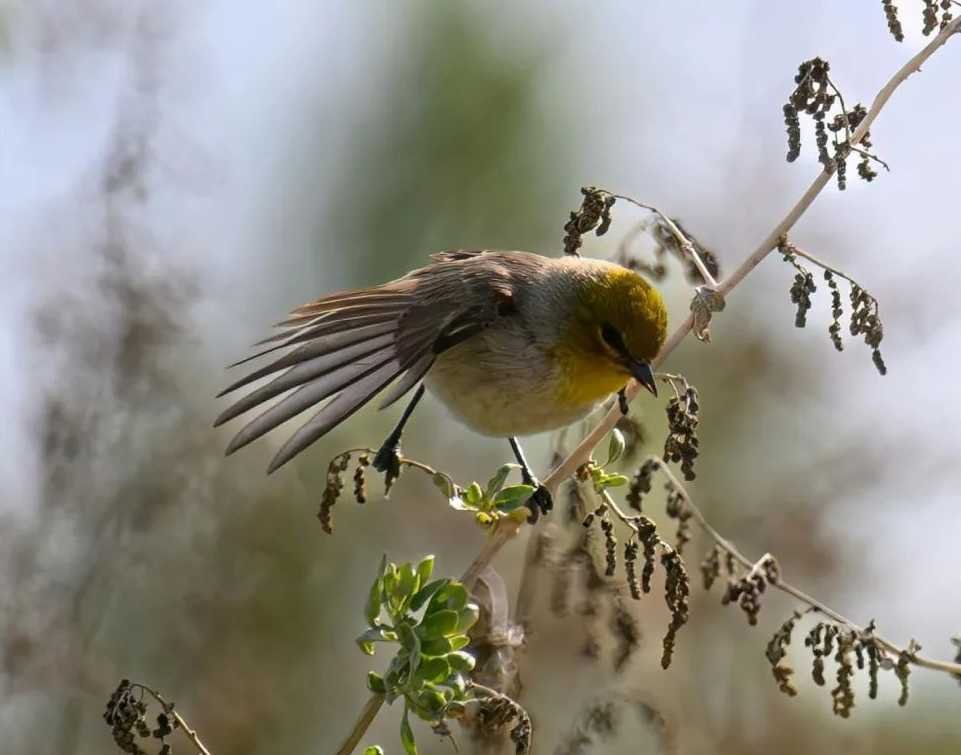
These social birds often gather in flocks, especially during the non - breeding season. They are commonly found in open woodlands, grasslands, and along the edges of cultivated fields, where they forage for seeds, insects, and nectar. The yellow - headed siskin builds cup - shaped nests in trees, and both males and females play active roles in raising their young, showcasing remarkable parental care.
Despite their charm, yellow - headed siskins are increasingly at risk. Habitat degradation due to deforestation and agricultural expansion, as well as the illegal pet trade, pose significant threats to their populations. Conservation groups are launching initiatives to protect their habitats and combat illegal wildlife trafficking, aiming to ensure that these dazzling birds continue to grace the South American skies for generations to come.
-------- END --------